Building the identity and growth infrastructure K–12 has never had.
This page is for investors and strategic partners evaluating alignment with The Kaiden Project™. It is written to be honest about where we are, what we are building, and what the validation path looks like.
Investor / Strategic Partner Conversation →
The category, the model, and where Kaiden is today.
Validate locally. Deploy institutionally. Grow through recurring district relationships.
The Kaiden Project™ uses a B2B school and district model. Initial assessment and deployment revenue supports readiness, implementation and configuration. Ongoing subscription revenue supports continued platform access, product development, operational support and expanded K–12 capabilities.
Foundation™
Single-School Deployment
- ✓ Student check-ins
- ✓ Student goals
- ✓ Care Check™
- ✓ Raise My Hand
- ✓ Core Growth Health™
- ✓ Teacher workflow
- ✓ Counselor workflow
- ✓ Family growth summaries
- ✓ School-level reporting
- ✓ Implementation support
Growth Intelligence™
Small District · Approx. 5–10 Schools
- ✓ Multi-school deployment
- ✓ Expanded Growth Health™
- ✓ Grade-band growth intelligence
- ✓ Cross-school support patterns
- ✓ Expanded counselor workflow
- ✓ Family engagement patterns
- ✓ Principal leadership views
- ✓ District-level trend visibility
- ✓ Pilot Impact Reporting
Executive Intelligence™
Medium District · Approx. 11–20 Schools
- ✓ District executive visibility
- ✓ Cross-school Growth Health™
- ✓ Care Check™ activity patterns
- ✓ Counselor capacity visibility
- ✓ Superintendent reporting
- ✓ Board-ready reporting
- ✓ Multi-school governance
- ✓ District expansion planning
Enterprise District — 21+ Schools
Custom assessment · phased deployment · custom annual subscription based on enrollment, school count, grade-band scope, integrations, reporting requirements and support model.
Commercial pricing is presented as a planning range. Final pricing depends on school count, student population, implementation scope, integrations, configuration, support requirements and deployment sequencing. The 90-Day Pilot remains a validation stage and is not represented as a guaranteed commercial conversion.
One school is the entry point. The district relationship is the opportunity.
Kaiden's growth model is not built around repeatedly acquiring isolated individual users. The objective is institutional adoption. A successful school creates a reference point. A successful district deployment creates expansion opportunity across additional grade bands, campuses and district workflows.
LAND THE SCHOOL. PROVE THE MODEL. EXPAND THE DISTRICT.
This is not a small student population.
The Kaiden Project™ is being built for a market where the student journey already spans thousands of districts, nearly one hundred thousand public schools, and more than forty-nine million students.
Source: National Center for Education Statistics, Common Core of Data, Table 2, School Year 2024–25 · nces.ed.gov/ccd
We start where we can execute.
California provides a large enough initial market to prove the model without requiring Kaiden to chase the entire country at once.
Source: National Center for Education Statistics, Common Core of Data, Table 2, School Year 2024–25 · nces.ed.gov/ccd
Schools already have technology. The question is what each system was built to do.
The following are representative category examples. They are not presented as direct valuation comparables or identical competitors.
SIS / District Systems
Records · enrollment · schedules · attendance · grades · operations
Representative example: PowerSchool
LMS
Courses · assignments · instruction · learning delivery
Representative example: Canvas / Instructure
Communication & Classroom
Teacher-family communication · classroom engagement · behavior tools
Representative example: ClassDojo
MTSS / Student Success
Interventions · progress monitoring · surveys · student-success data
Representative examples: Panorama Education · Branching Minds
College & Career Readiness
Course planning · applications · pathways · career preparation
Representative example: SchooLinks
THE KAIDEN PROJECT™
K–12 Identity Growth Infrastructure™
Kaiden is not being built to replace these systems. It operates alongside them, adding a student-generated identity, growth and support layer that matures from kindergarten through graduation.
Capital has already validated the importance of the surrounding K–12 technology stack.
Acquisition value. Bain Capital agreed to acquire PowerSchool in a deal valuing the company at $5.6 billion.
Reuters, June 7, 2024
Acquisition value. KKR agreed to acquire Instructure in a $4.8 billion transaction.
Reuters, July 25, 2024
2022 financing valuation. Forbes reported ClassDojo's 2022 financing valued the company at approximately $1.25 billion. This is a historical financing benchmark, not a statement of current 2026 valuation.
Forbes, July 21, 2022
Series B raised in 2024. Valuation was not publicly disclosed in that report.
Forbes, October 21, 2024
These companies are not direct valuation comparables for The Kaiden Project™. They show that education infrastructure, communication, student-success software, learning systems and future-readiness technology can support substantial enterprise value when adoption, recurring revenue and institutional dependence are proven. Kaiden still has to earn that value through validation and execution.
What adults see is not always where the story started.
Present. Assignment completed. No referral. No obvious crisis. A student who appears to be getting through the day.
Something happened. I do not feel like myself. I do not know where I belong. I need someone — but I may not know how to say it.
Behavior may not be the first signal. It may simply be the first signal everyone can finally see.

Many existing school systems are designed around a different question.
Many existing school systems are designed primarily around academics, attendance, behavior, assessment, communication or operations. The Kaiden Project is being built around a different question: how can student voice, identity growth, support signals and future development become part of one continuous K–12 experience?
Kaiden is not a replacement for SIS, LMS, or PBIS. It operates alongside them, adding a student-generated growth and support layer alongside systems primarily built around academics, attendance, behavior, interventions, and operations.
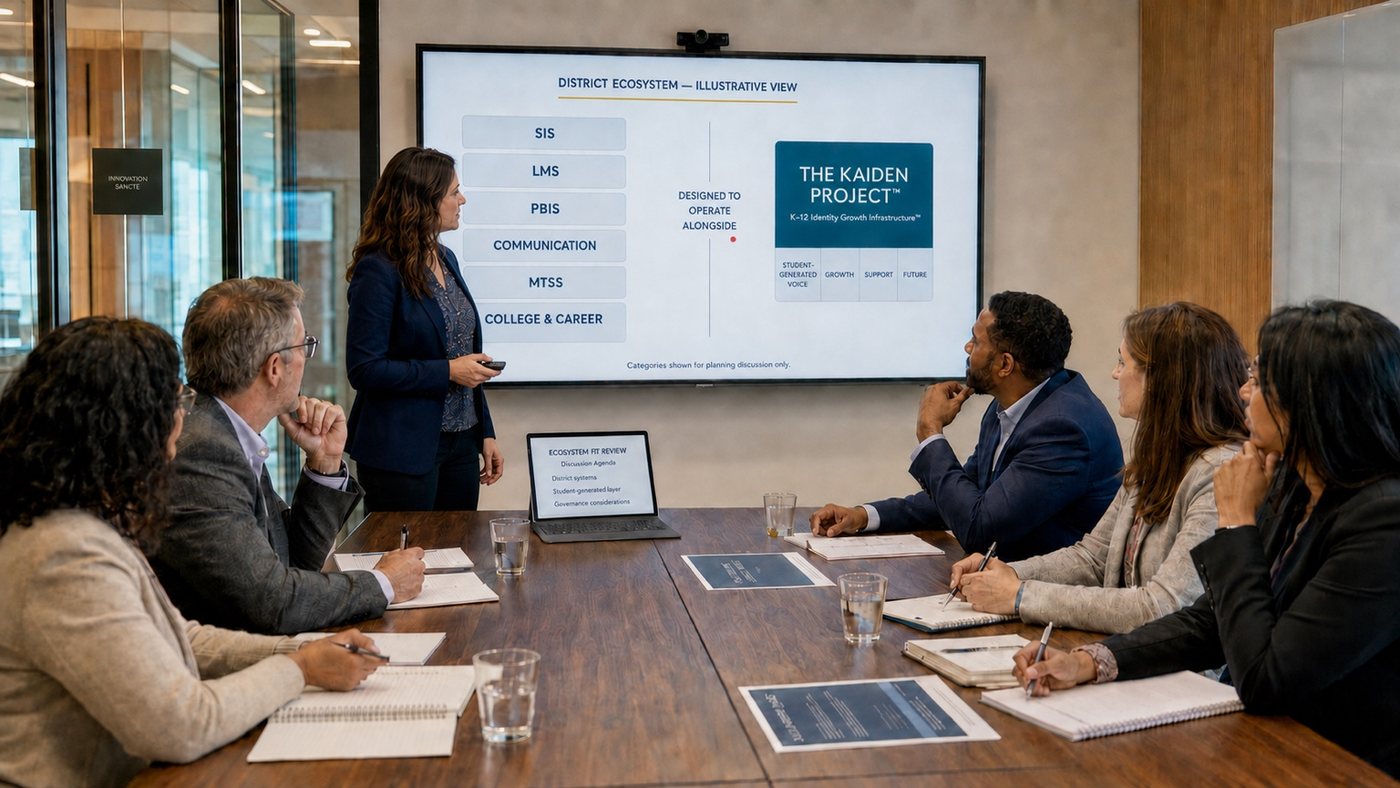
K–12 Identity Growth Infrastructure™
One continuous student growth journey from kindergarten through graduation. Each appropriate interaction can contribute to the student's continuing Growth Record™ over time. The experience and the platform grow with the student.

This is a working platform — not a concept slide.
The Kaiden Project™ already includes student experiences, educator workflows, family views, school leadership visibility and district-level interfaces. The investor story should show the real product because the product itself is part of the evidence of execution.
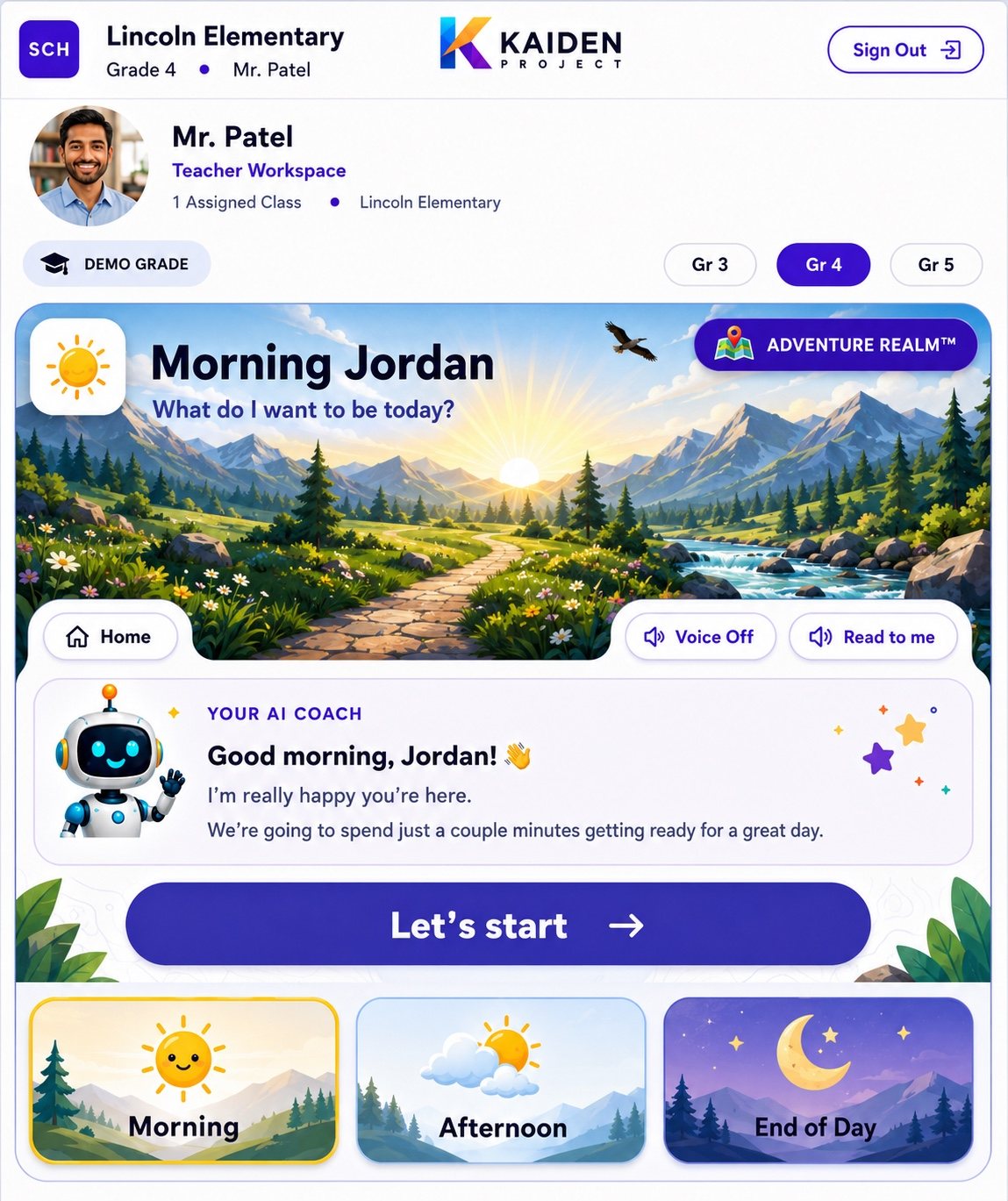
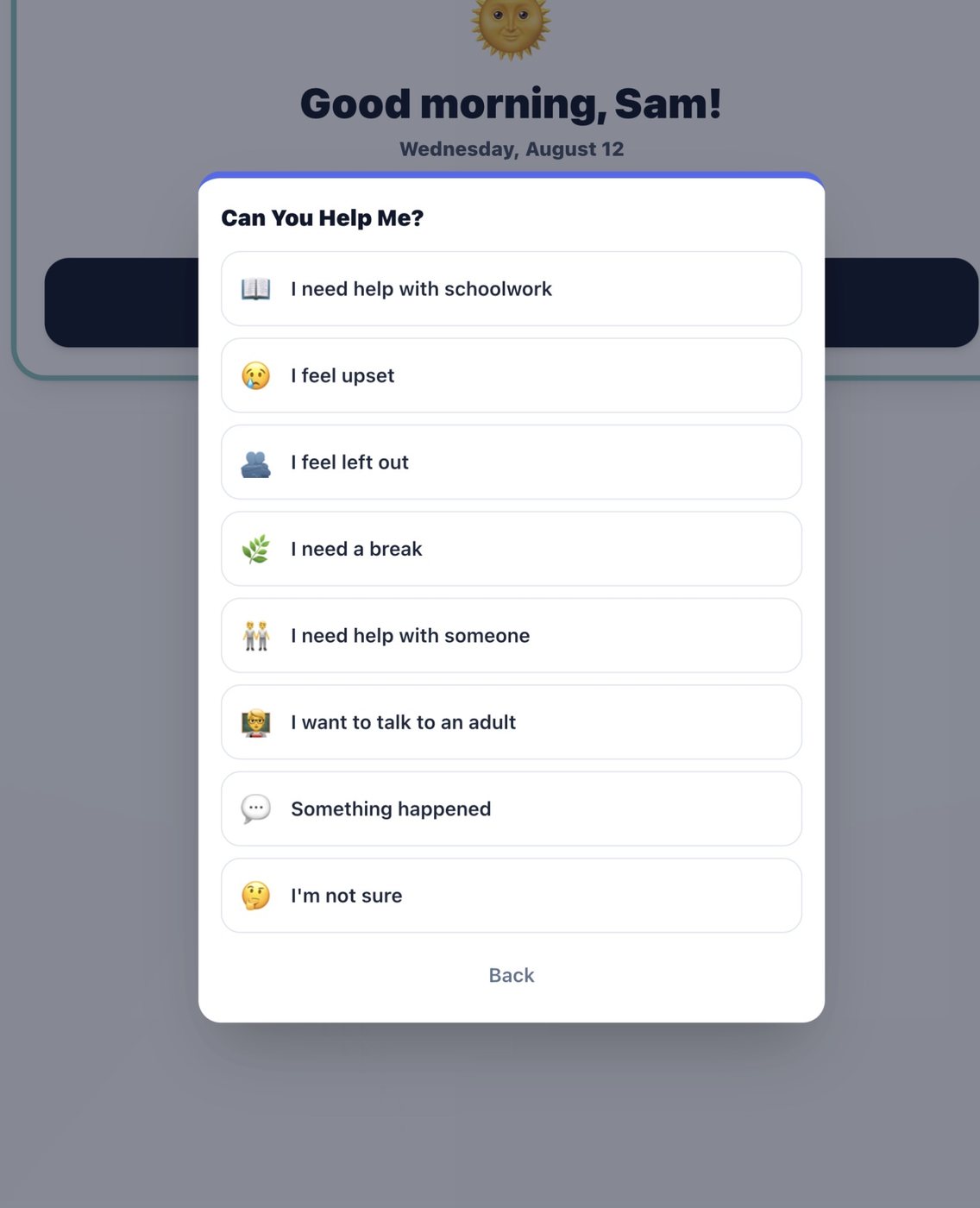
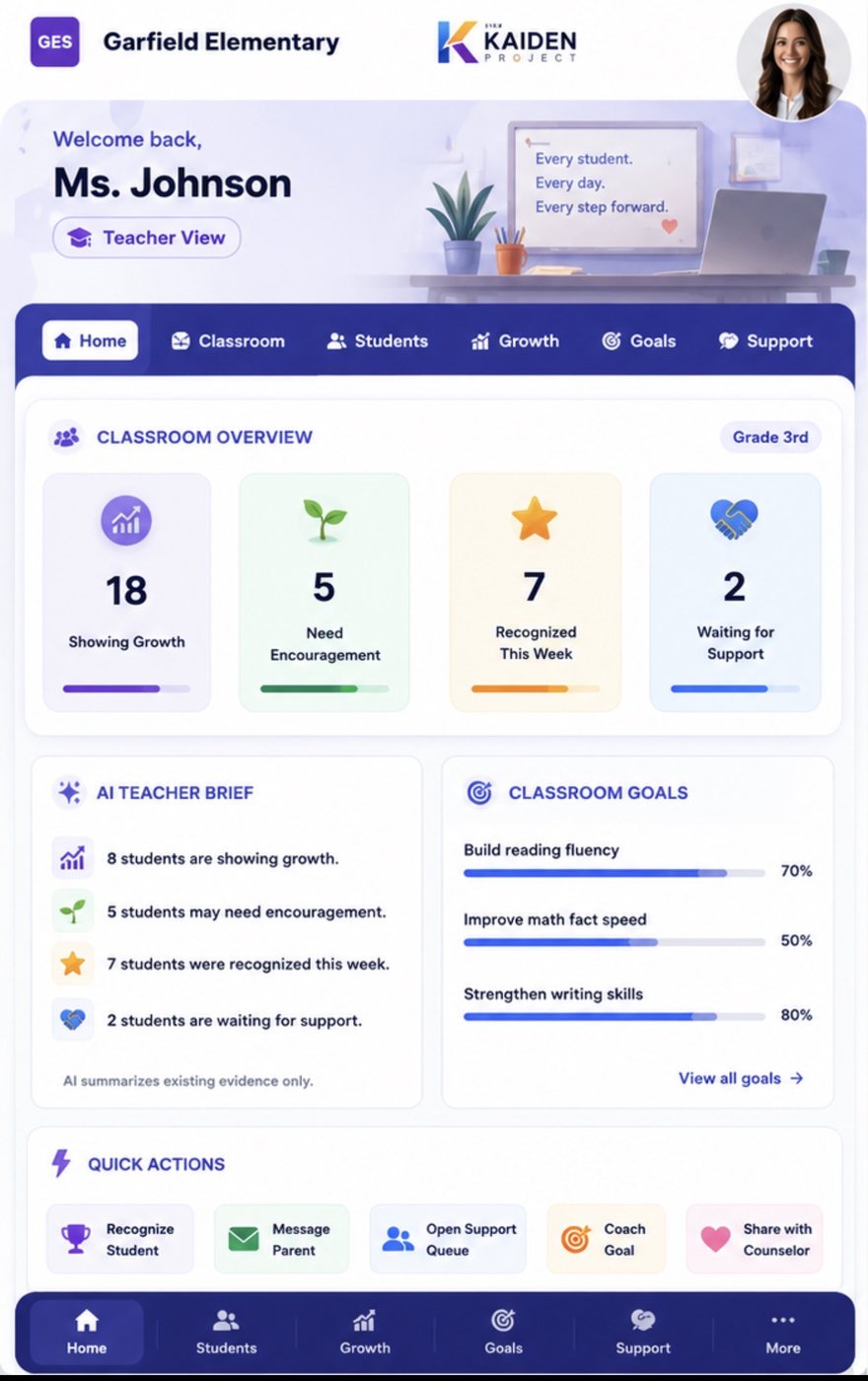
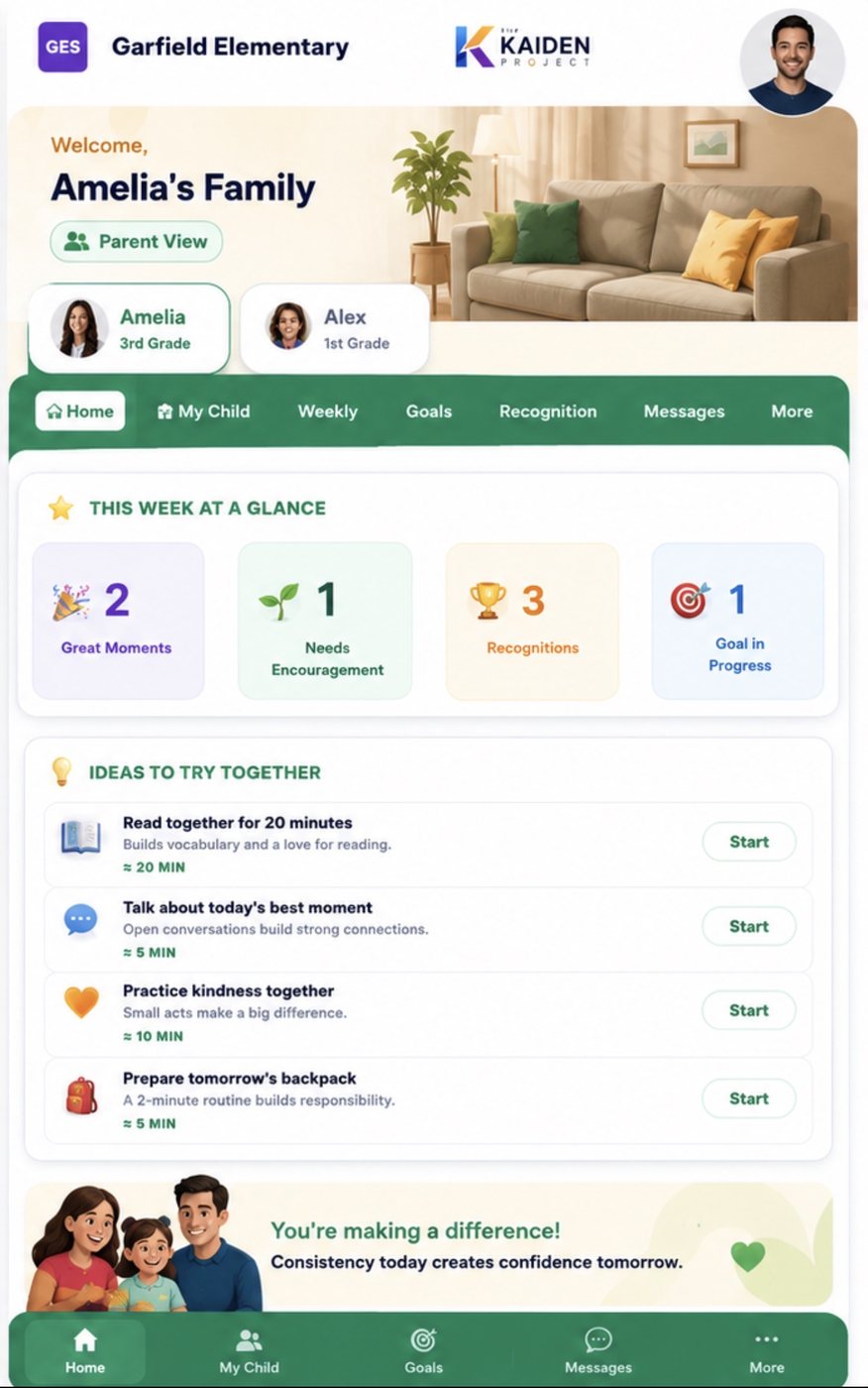
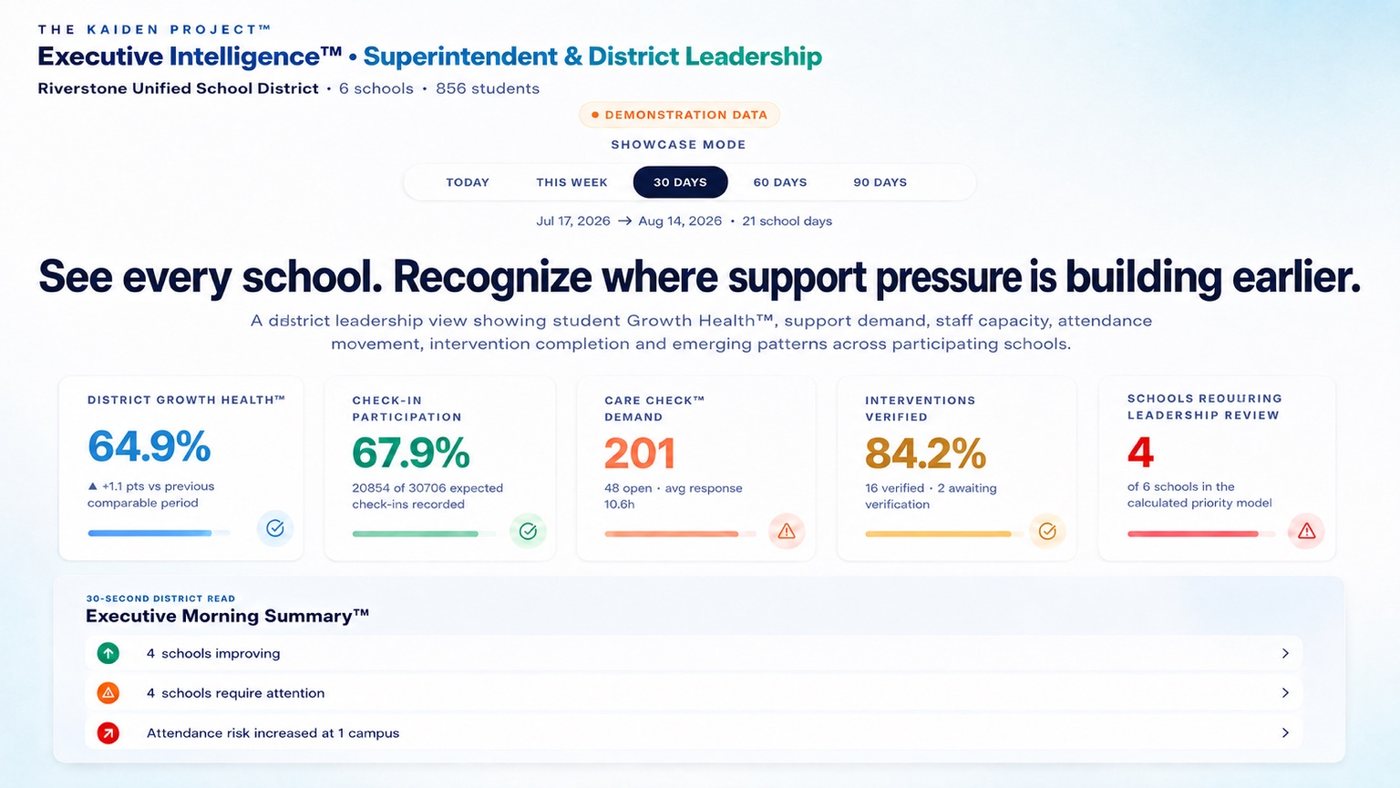
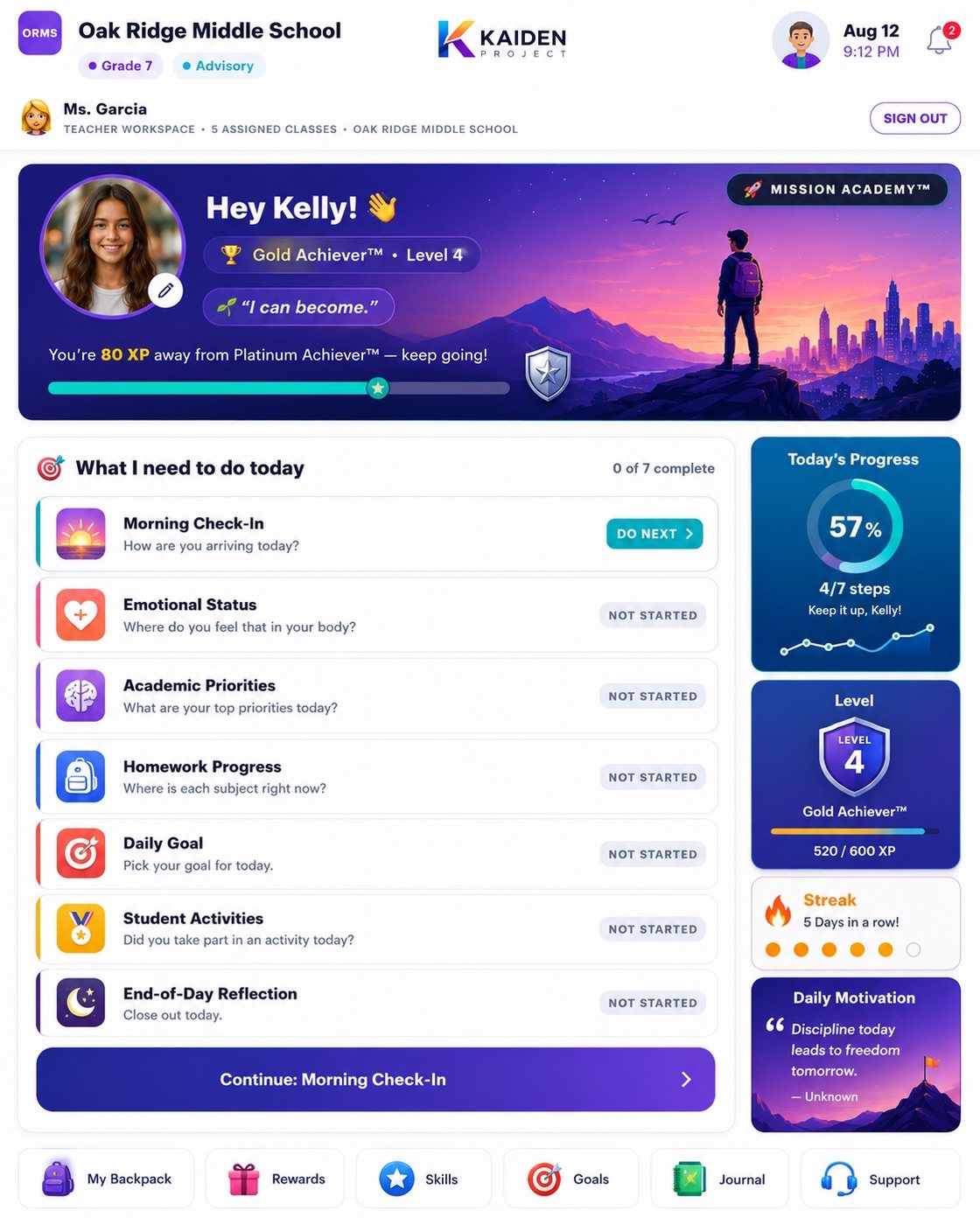
Student voice enters the system at the student level. Authorized adults receive role-appropriate visibility. School and district leaders see patterns at the level appropriate to their responsibility. Human judgment remains part of every support decision.
EXPLORE THE PLATFORM →We intend to earn the evidence before we scale the claim.
Honest statement: We do not yet have a completed Kaiden case study. The 90-Day Pilot exists to establish whether students consistently use the experience, whether educators adopt the workflow, whether support requests move through the configured pathway, whether families remain appropriately connected, and whether school leadership receives useful visibility.
School Validation
90-day pilot at one school or one grade band. Establish check-in habit. Measure participation baseline.
90-Day Evidence
Pilot Impact Report prepared. Participation data. Care Check™ activity. Teacher adoption. Family engagement.
Initial Case Study
First documented outcomes vs. baseline. Student growth signals. Adult response patterns. Family engagement change.
Expansion
Additional grade bands or schools in the same district. Second pilot district where appropriate.
Multi-School Validation
Growth Health™ data across multiple schools. Superintendent-level reporting. Board-ready data.
Commercial Deployment
Tier 1 / Tier 2 / Tier 3 deployment packages offered based on demonstrated fit, scope and implementation requirements.
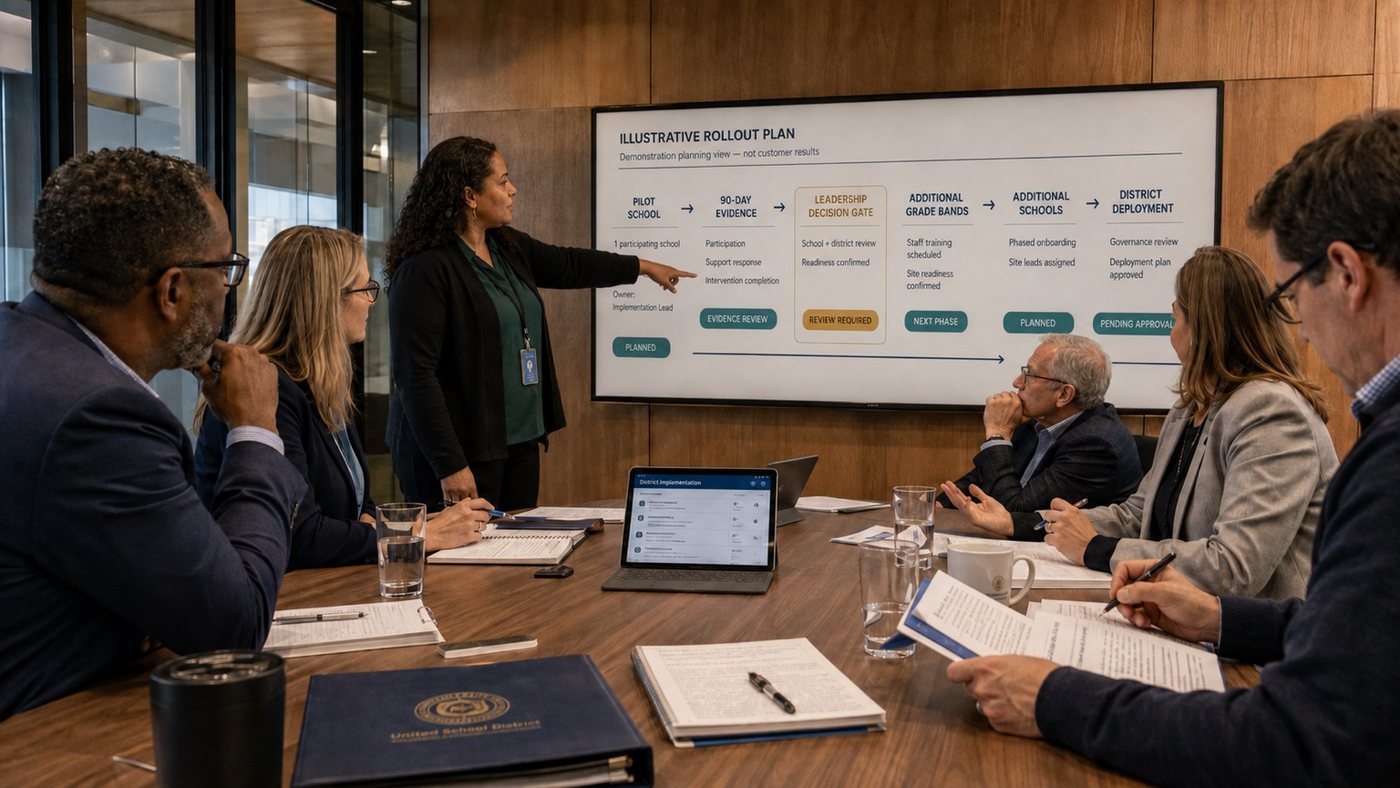
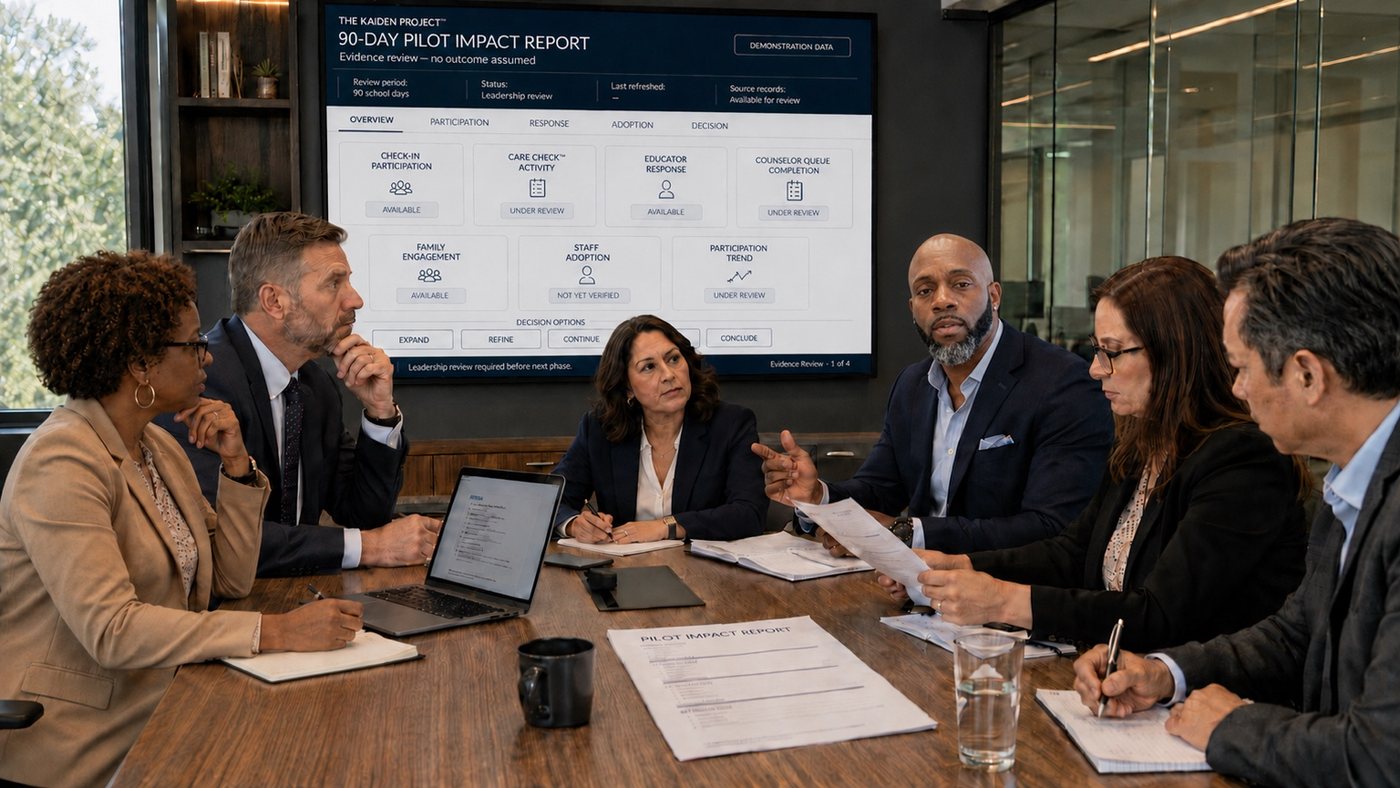
Demonstration Data — Evidence review — no outcome assumed.
The value is not one feature. It is the continuity of the system.
Six compound advantages designed into the architecture:
1 · K–12 Continuity
Build Me™ → Find Me™ → Launch Me™ creates a developmental architecture that changes with age without forcing the student to begin an entirely different growth journey at each school transition.
2 · Continuing Growth Record™
Each appropriate interaction can contribute to the student's continuing Growth Record™ over time, creating longitudinal context around goals, recognitions, support interactions and development.
3 · Student-Generated Signals
Kaiden adds information students actively contribute themselves rather than relying exclusively on downstream academic, behavioral or attendance indicators.
4 · Multi-Role Workflow
Student, teacher, counselor, family, principal and district experiences are designed around different responsibilities while remaining part of one coordinated architecture.
5 · Age-Based Product Depth
The product does not simply reskin one experience from kindergarten through twelfth grade. Language, responsibility, identity development and future planning mature with the student.
6 · Institutional Embedding
As deployment expands across grades, schools, support workflows and leadership reporting, the value increasingly comes from continuity across the system rather than any single interface.
The moat has to be earned.
Kaiden does not currently claim an unbeatable data moat or irreversible switching cost. Those become credible only after sustained institutional adoption. The architecture is designed so that longitudinal context, workflow integration and K–12 continuity become more valuable as deployment matures.
This did not begin as a software idea.

RAYMOND ANDERSON
Founder & Head of The Kaiden Project™
The Kaiden Project began with my son. I saw changes in his confidence and motivation before there was one dramatic event that explained what was happening. That experience forced me to ask a question I could not let go: why do adults so often recognize the struggle only after attendance, grades, behavior, discipline or disengagement begins to change?
My background taught me to look at systems differently. When something important is discovered too late, I look upstream: Where was the earlier signal? Who could see it? Who needed to act? What process connected them?
Kaiden applies that discipline to a deeply human problem. Not to turn children into data. Not to diagnose them. Not to replace teachers, counselors or parents. The goal is to give students another way to express what they are experiencing and give the adults responsible for them a clearer structure for seeing, responding and following through.
"We are not building a platform that decides who a child is. We are building infrastructure that gives the child more opportunity to tell us."
Platform built. Validation is the next proof point.
BUILT
- ✓ Build Me™ K–5
- ✓ Find Me™ 6–8
- ✓ Launch Me™ 9–12
- ✓ Student experience
- ✓ Educator workflows
- ✓ Family experience
- ✓ School leadership
- ✓ District visibility
DEFINED
- ✓ 90-Day Pilot structure
- ✓ Pilot Success Scorecard™
- ✓ Role-based workflows
- ✓ Commercial tier architecture
- ✓ Implementation sequence
UNDERWAY
- ✓ School and district outreach
- ✓ Strategic partner conversations
- ✓ Pilot-site development
- ✓ Market validation
NEXT
- ✓ Paid / structured validation
- ✓ Measured adoption
- ✓ Pilot Impact Report
- ✓ Initial case study
- ✓ Commercial expansion
"The immediate objective is not national scale. It is proof. The next increase in enterprise value should come from converting a built platform into validated institutional adoption."
Capital should shorten the distance between platform and proof.
Product & Engineering
Finish production hardening, integrations and deployment tooling.
Security & Governance
Continue privacy, security, role-access and district-readiness work.
Pilot Implementation
Onboarding, training, configuration and customer success.
Evidence & Validation
Pilot measurement, reporting and initial case-study development.
District Development
Build the pipeline from pilot conversations to institutional adoption.
Operating Capacity
Add the people and infrastructure required to support multiple implementations without weakening service quality.
"The next capital milestone is intended to convert product development into evidence: paying customers, repeatable deployment, documented adoption, recurring subscription revenue and referenceable district outcomes."
If you believe K–12 is missing this layer, we should talk.
We are looking for strategic partners and investors who understand that education infrastructure is built through trust, evidence, patient execution and institutional adoption — not through inflated claims about traction that has not yet been earned.
Founder & Head of The Kaiden Project™ · Raymond Anderson
info@thekaidenproject.com