What changes from K–2 to Grades 3–5
K–2 — Early Learning
Recognize and express.
In K–2, students begin learning how to name feelings, identify needs and recognize positive actions with guidance from adults.
3–5 — BUILD ME™
Choose, practice, own and reflect.
In Grades 3–5, that foundation grows into greater ownership. Students choose priorities, set goals, monitor progress, reflect on challenges and begin seeing evidence of who they are becoming.
Students begin by identifying what they want to work on and how they want to show up.
The morning sequence connects academic readiness with personal responsibility. A student first identifies a classroom focus — reading, math, writing, science, homework, group work or a teacher-assigned task. They then select one personal improvement for the day. Then three goals to work toward.
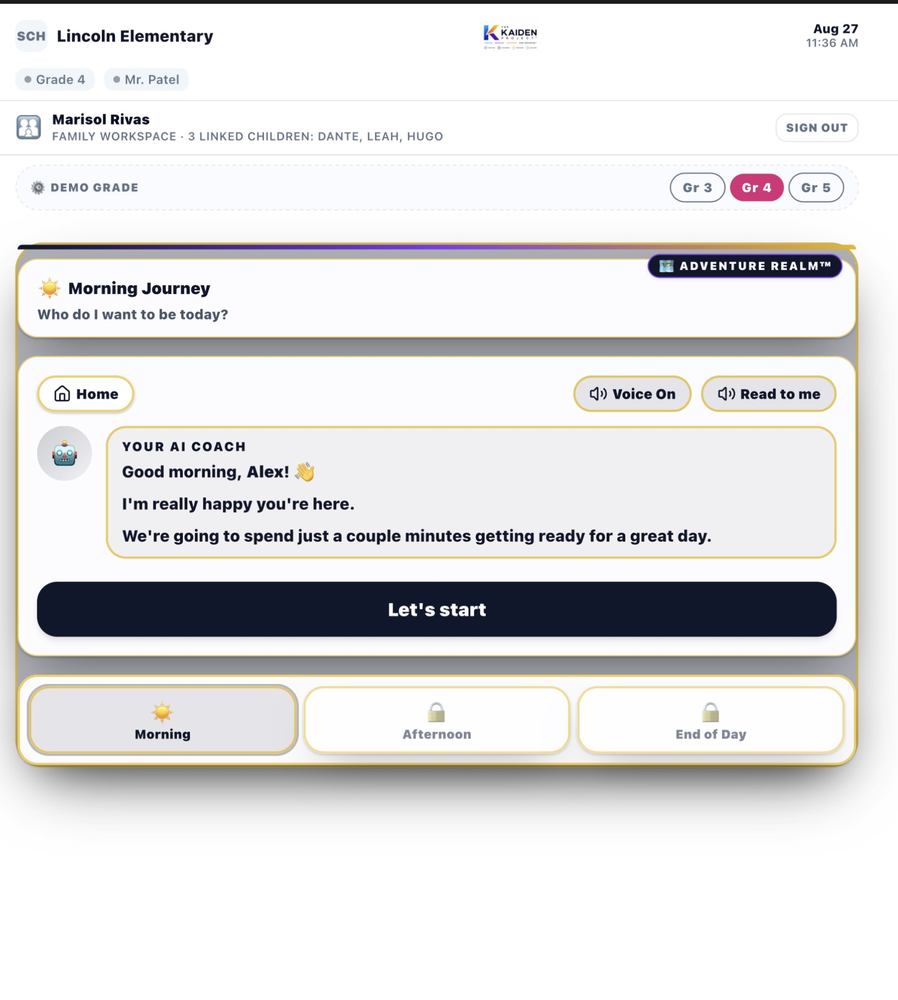
Good morning, Alex. The morning experience begins with a warm, student-directed entry point. The AI Coach greeting is based on the student's own record — not generated commentary.
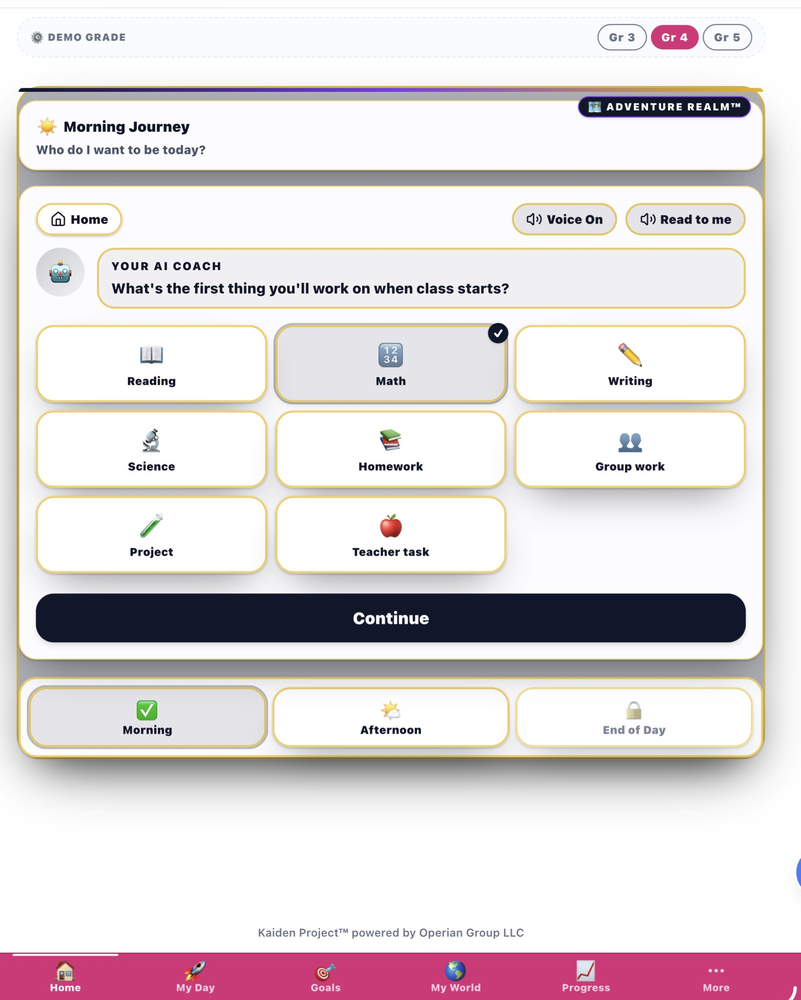
Students identify their first academic focus. This connects the daily check-in to real classroom work — reading, math, writing, science, homework, group work, or a teacher-assigned task.
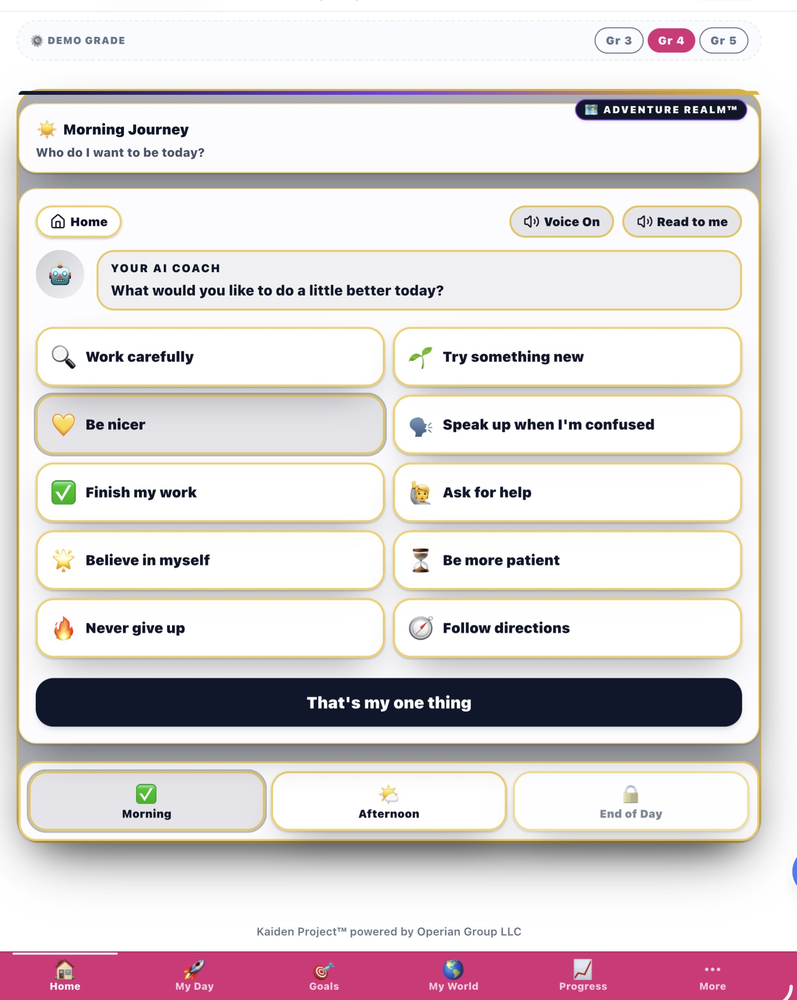
Students select one personal improvement for the day: Work carefully. Be nicer. Try something new. Ask for help. Believe in myself. Stay patient. Follow directions. Finish my work.
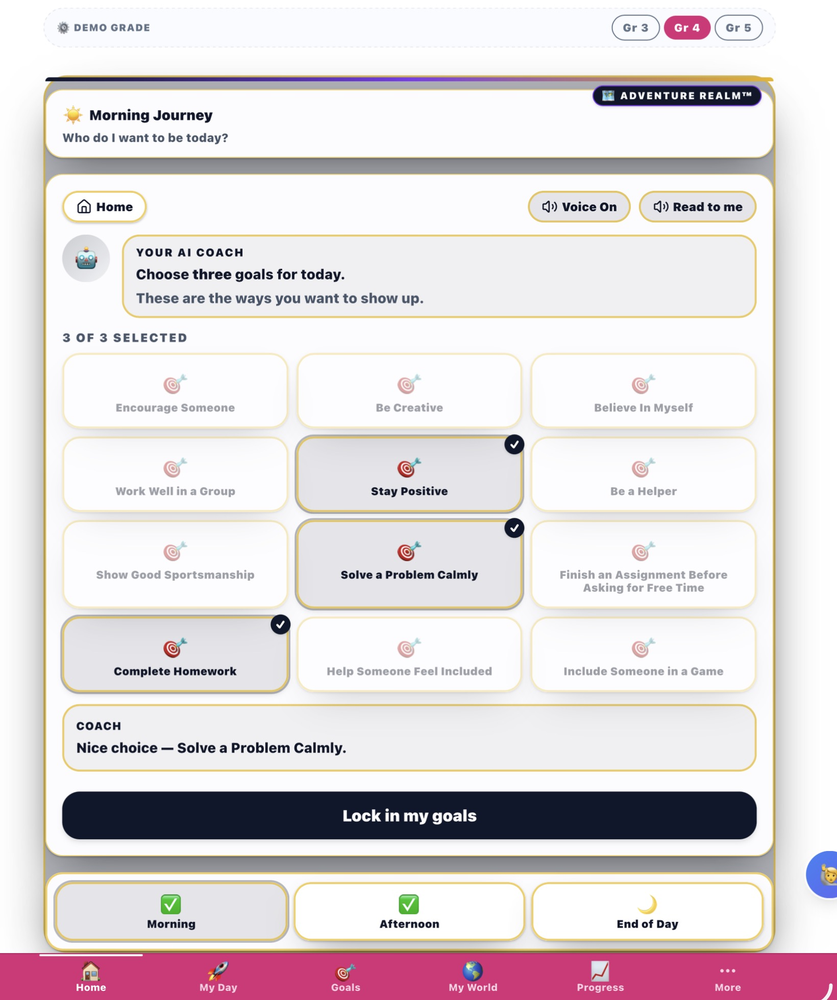
Students select three goals for the day from a structured menu spanning emotional regulation, responsibility, kindness, courage, academic persistence and belonging.
Give students more ways to tell us how they’re doing.
Beyond a simple "how are you feeling" prompt, BUILD ME™ helps students connect emotion to physical sensation — building emotional vocabulary and body awareness together. This is student self-expression, not clinical assessment. It creates a two-dimensional check-in: emotional experience plus physical state.
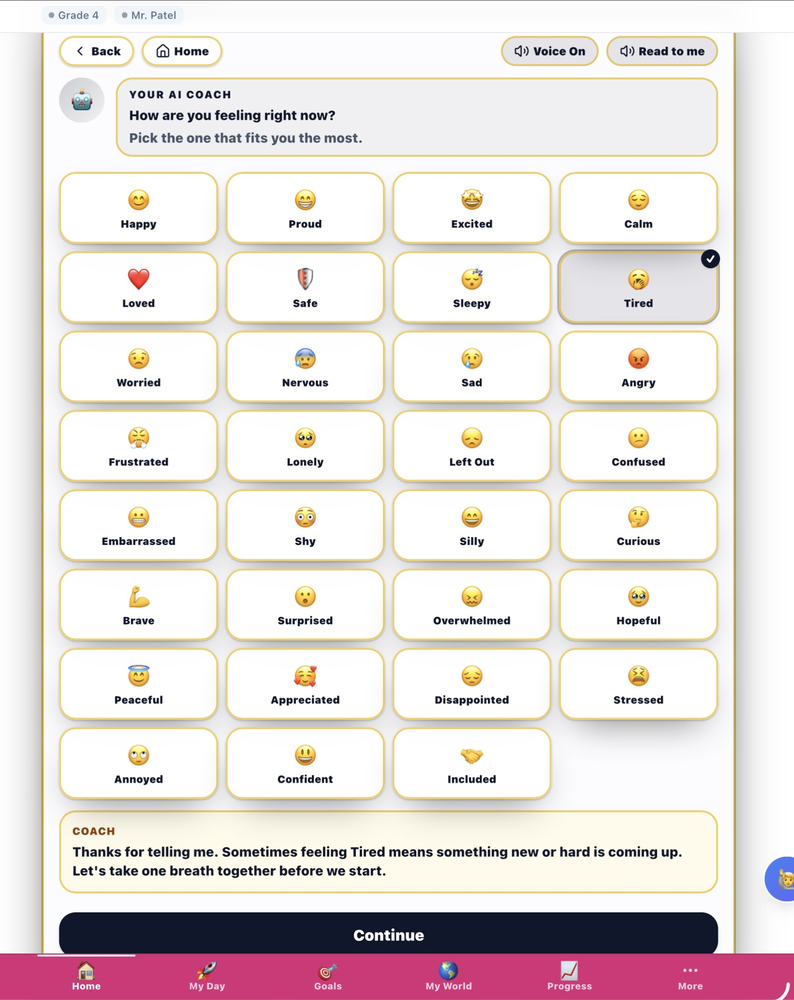
A full emotional vocabulary. Happy, proud, excited, calm, safe, worried, nervous, sad, angry, frustrated, lonely, left out, confused, embarrassed, shy, overwhelmed, hopeful, confident, included. Students select from a range that normalizes the full spectrum of feelings.
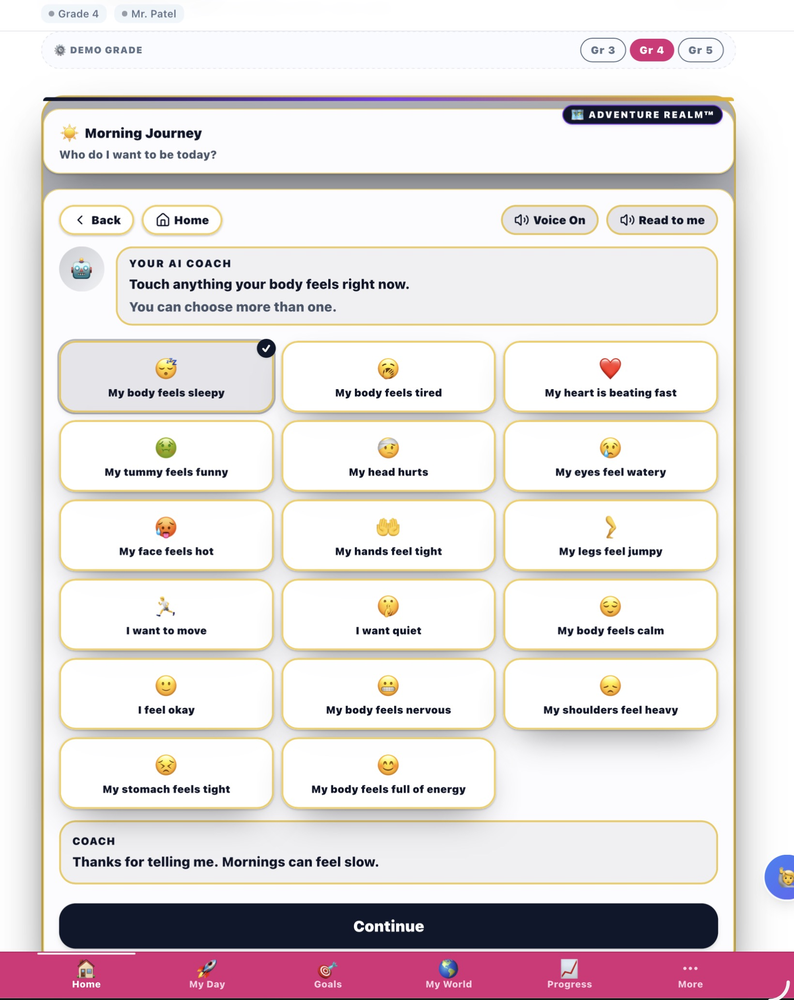
Body awareness as a second dimension. Students identify physical signals: sleepy, heart beating fast, tummy feels funny, hands feel tight, legs feel jumpy, want to move, want quiet, shoulders heavy. Two dimensions together give authorized adults a more complete picture.
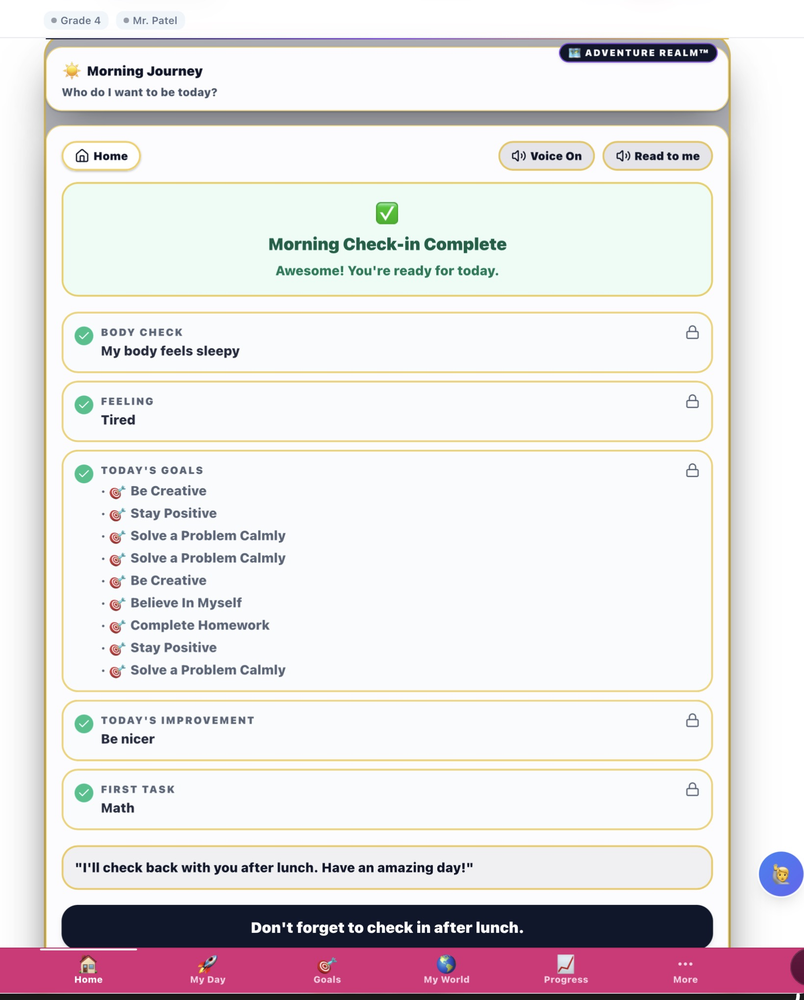
Morning complete. Goals set. Improvement chosen. First task identified. AI Coach: "See you after lunch, Alex." The check-in closes and the student begins their school day with their intentions recorded.
Understand how the day actually changed.
BUILD ME™ returns to the student in the afternoon. A student who arrived feeling tired and unfocused may report a good day by 1:30 PM. A student who started calm may report feeling frustrated. The morning-to-afternoon feedback loop creates a richer picture than a single daily data point — and preserves both moments rather than reducing the child to one score.
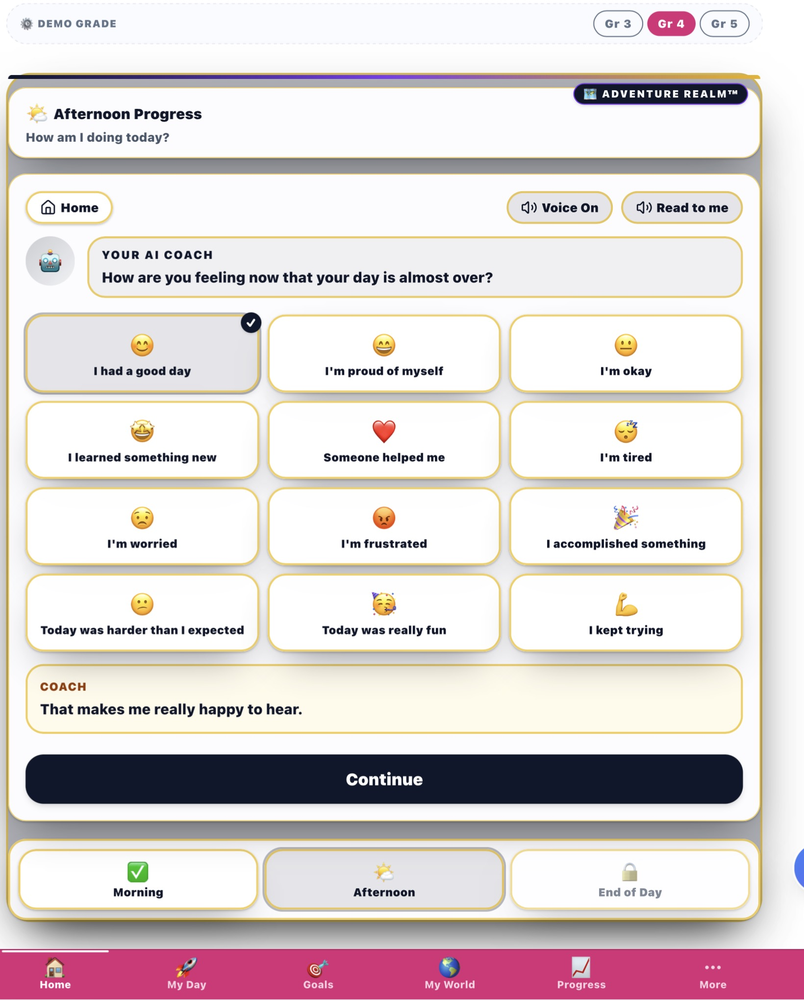
Afternoon emotional check-in. I had a good day. I'm proud of myself. I'm okay. I learned something new. Someone helped me. I'm tired. I kept trying. Today was harder than expected. The student reports where they actually are — not where they are expected to be.
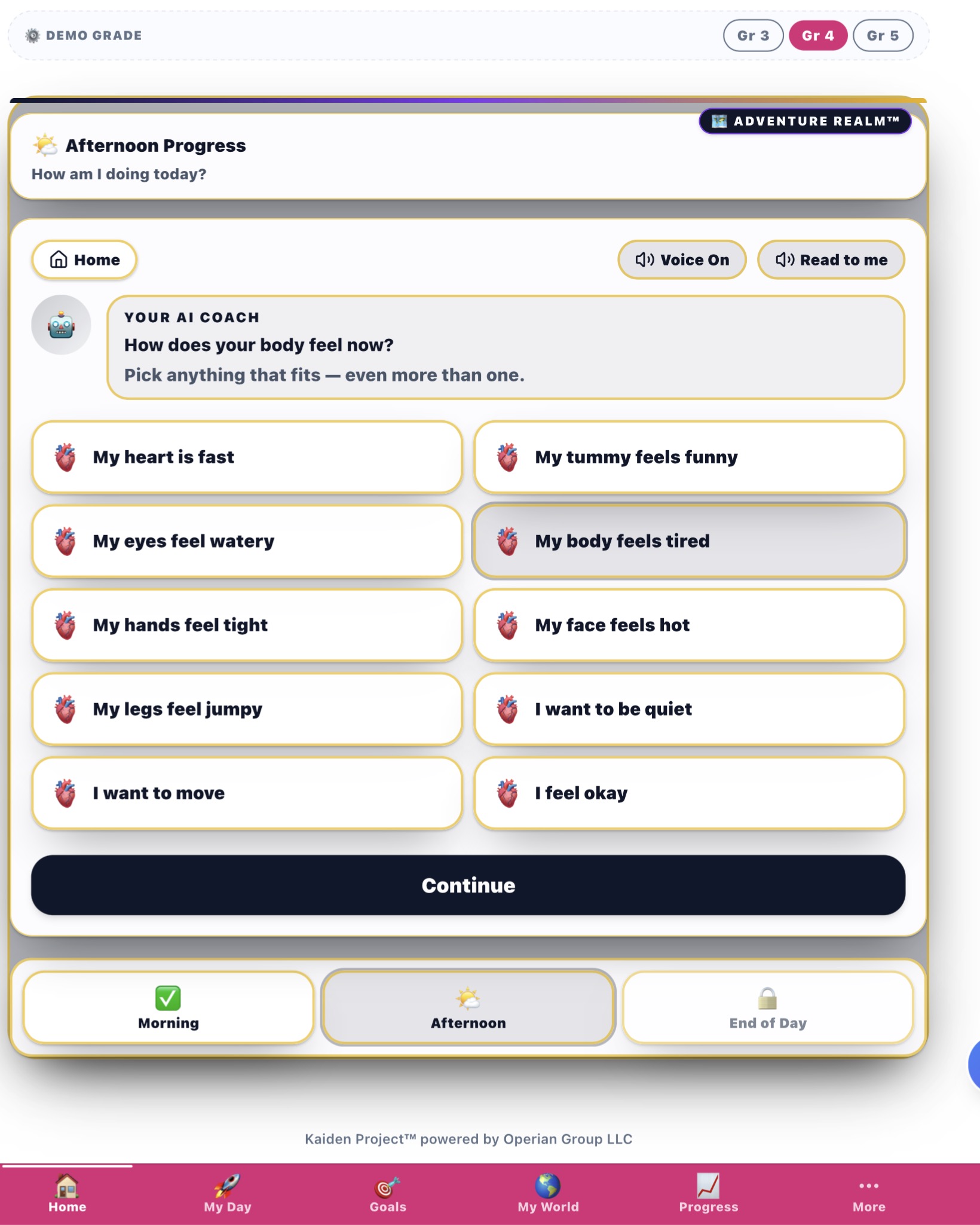
Body check returns in the afternoon. The parallel between morning and afternoon body states gives authorized adults a more complete view of the student's experience across the school day.
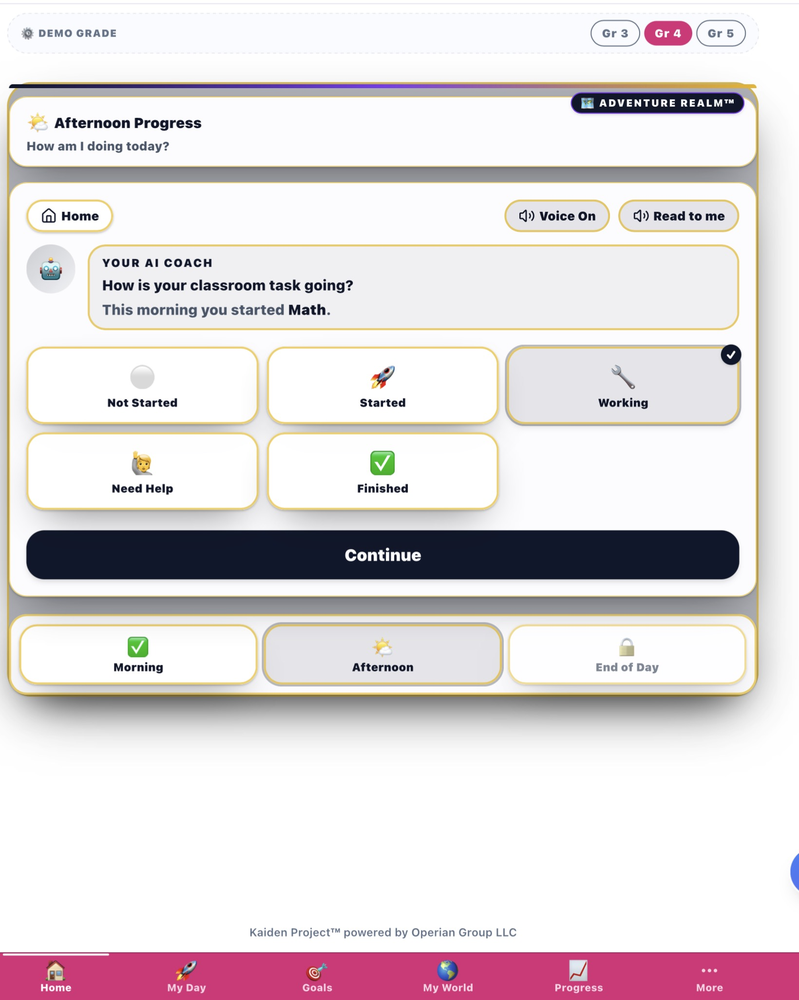
Classroom task progress — student self-report. Not Started, Started, Working, Need Help, Finished. Kaiden does not replace the LMS or pull grades. It captures the student's own perspective on where they stand — and surfaces "Need Help" before missing work becomes a pattern adults only discover after the fact.
“Who did I become today?”
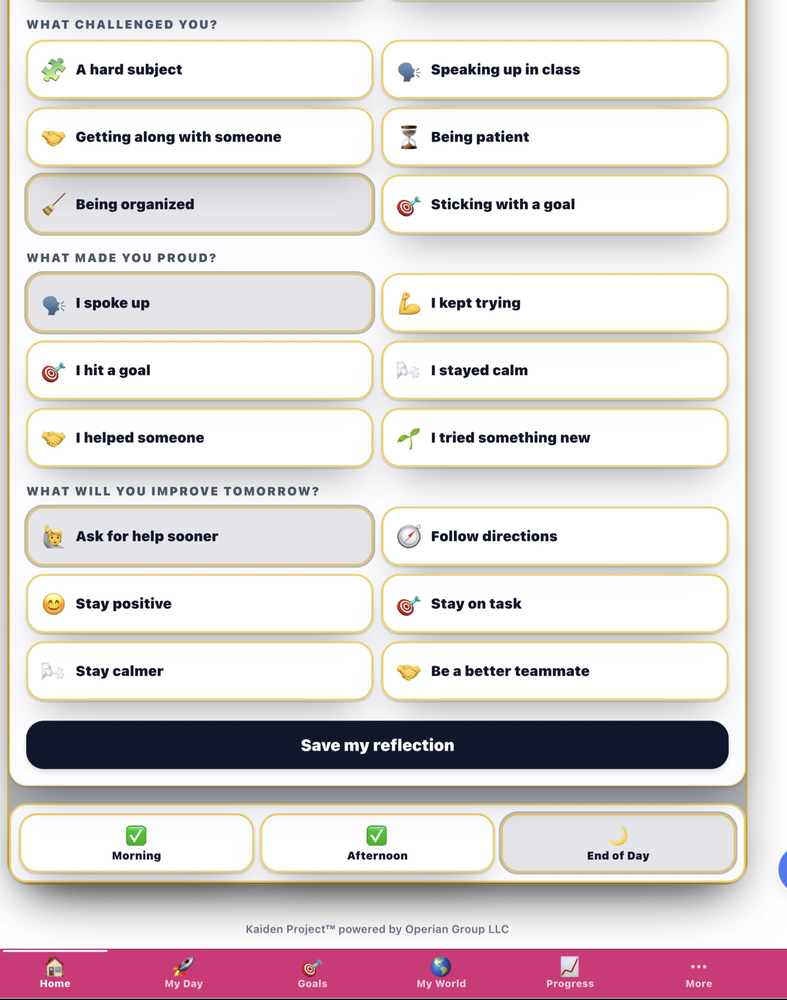
Reflection closes the day. What challenged you? What made you proud? What will you improve tomorrow? Three questions that turn a school day into growth evidence — honest, student-owned, and preserved in the Growth Record™.
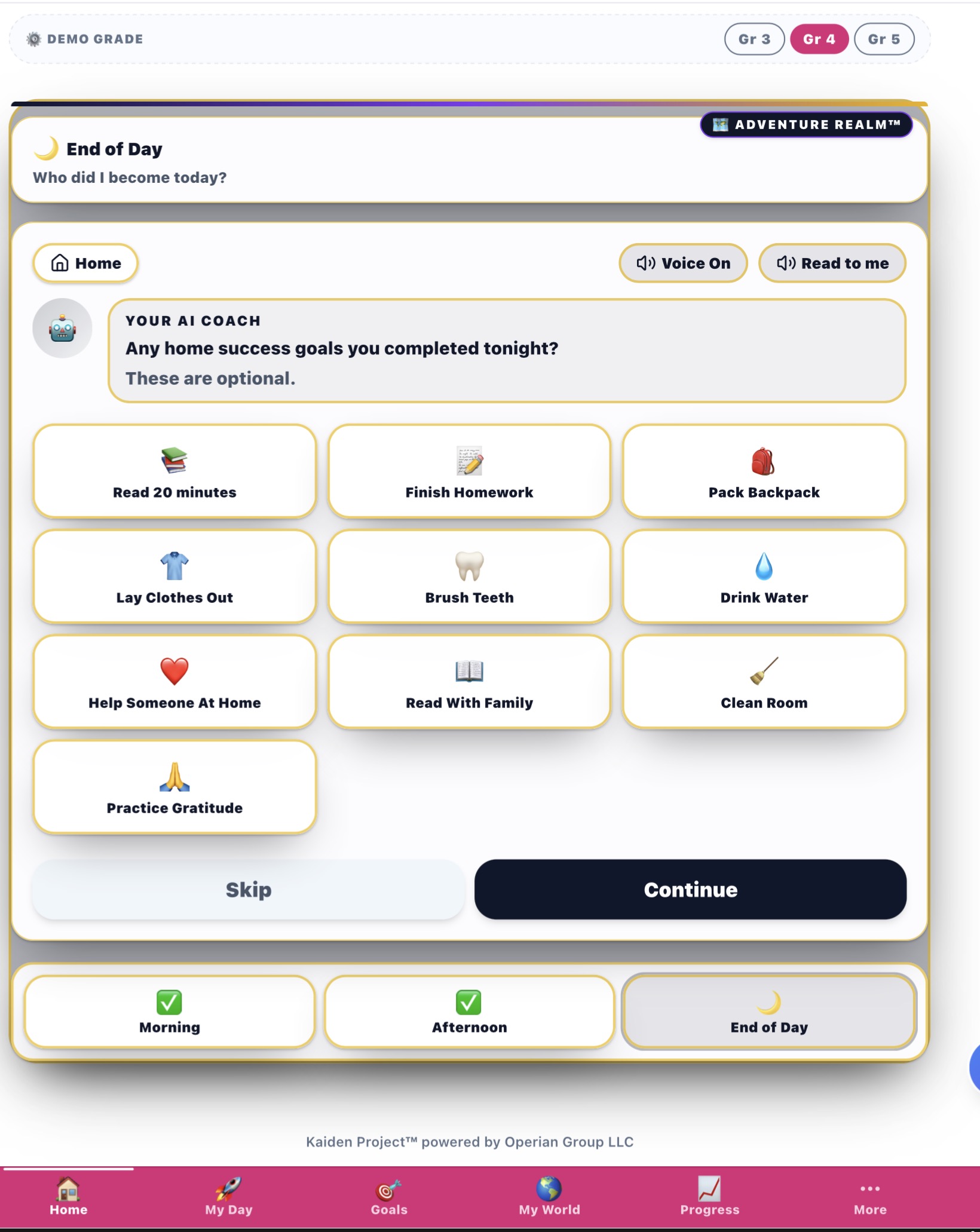
Growth does not stop at dismissal. Optional Home Success goals help students practice responsibility, preparation, reading and healthy routines at home. These are student-chosen — not another program for parents to manage.
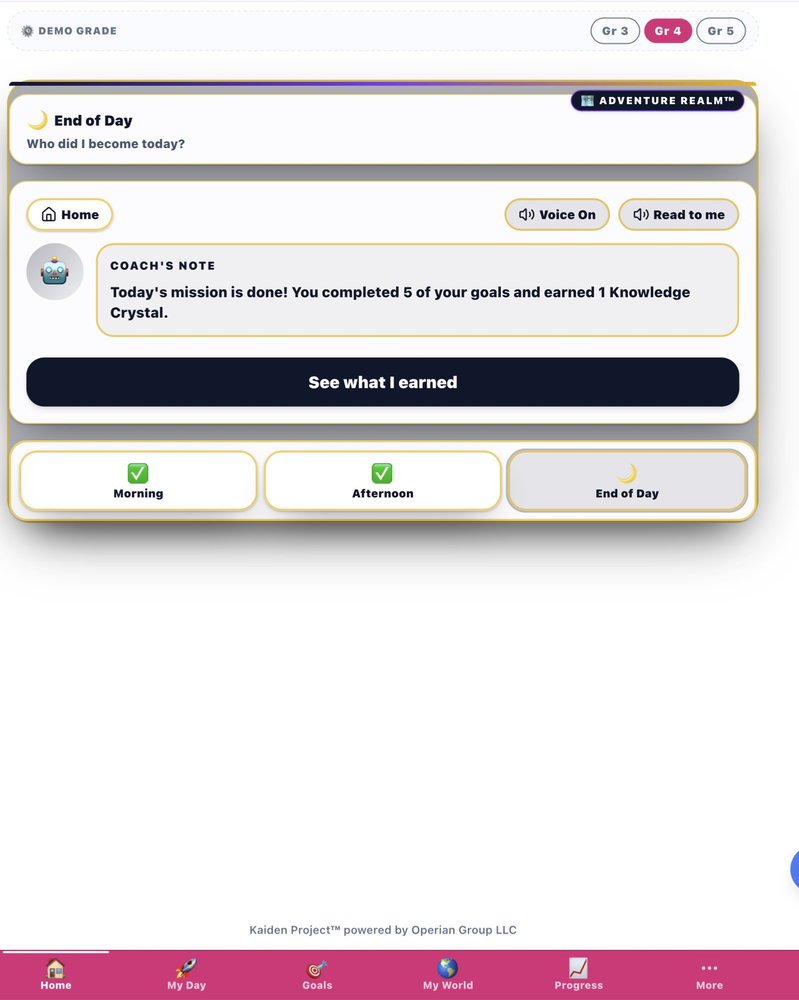
Today's mission is done. Completed 5 goals. Earned 1 Knowledge Crystal. The AI Coach note is generated from the student'x2019;s own verified activity — not written copy. Growth Points and Knowledge Crystals link this daily completion to the Village reward system.
Growth builds your world.
Different types of growth unlock different types of progress. Reading builds something. Kindness builds something. Problem-solving builds something. Physical activity and persistence build something. The Village is not a leaderboard — it is the student’s own world, built through their own verified activity.
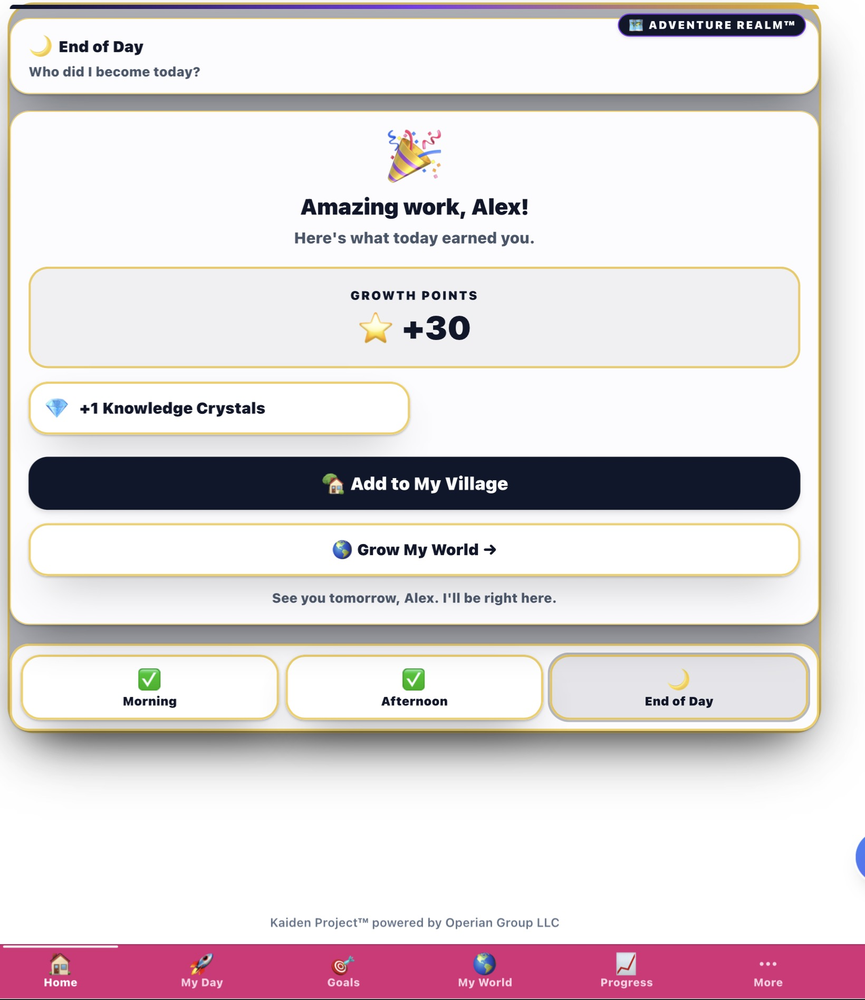
Growth Points earned. Knowledge Crystal unlocked. Two options: Add to My Village or see you tomorrow. The reward is immediate and visible — tied directly to what the student actually did today.
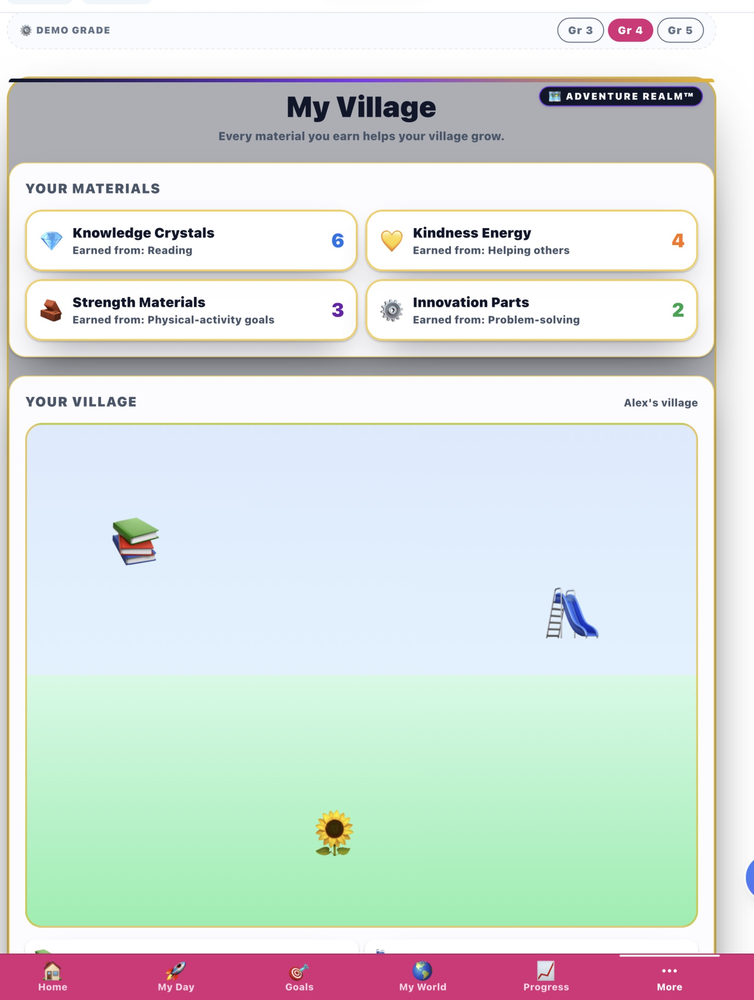
My Village — Knowledge Crystals (reading and learning) · Kindness Energy (helping others) · Strength Materials (physical activity and persistence) · Innovation Parts (problem-solving). No public leaderboard. No rankings. Peer village visits are cooperative, not competitive.
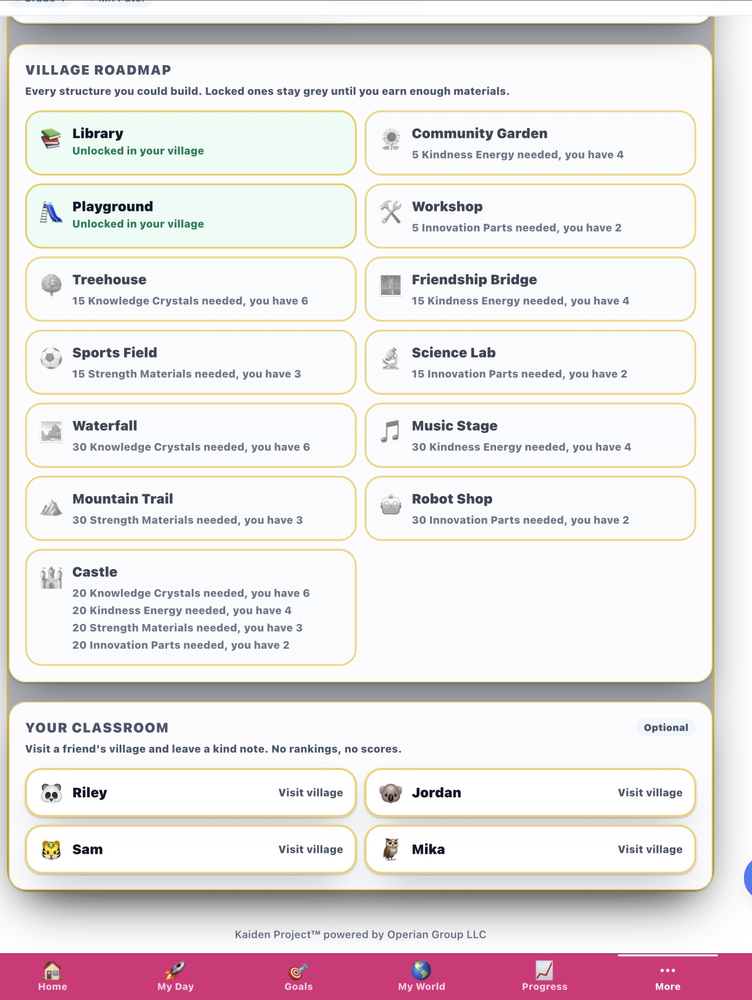
Library and Playground unlocked. Treehouse, Workshop, Friendship Bridge, Sports Field, Science Lab, Mountain Trail, Robot Shop and Music Stage still being built. The roadmap gives students something to work toward across weeks and months — not just one school day.
One check-in is a moment. Patterns tell the story.
When daily activity accumulates across weeks, it becomes a growth story — one that belongs to the student, is measured only against the student’s own previous evidence, and is never used to rank the child against classmates.

4-week personal trend: 180 → 220 → 250 → 310 XP. Goals progressed. Reading minutes. Kindness acts. Teacher encouragement note from Mr. Patel — a human relationship, not an algorithm. Five Pillars: Presence, Responsibility, Focus, Leadership, Integrity. "This week vs. last week — only YOUR own work."
A student should not have to fail a class, receive a discipline referral, or reach a crisis before adults recognize that something has changed.
SUPPORT BEFORE FAILURE™
From first bell to reflection — in Alex’s experience.
Who do I want to be today?
Alex opens BUILD ME™. Morning Welcome. Choose first task, one improvement, three goals.
How am I feeling?
Emotion check. Body check. Two dimensions of self-awareness before the school day begins.
Morning complete
AI Coach: "See you after lunch, Alex." Intentions recorded. Day begins.
Classroom task progress
Alex reports Math is in progress. Writing needs help.
How is my afternoon?
Afternoon emotional check-in. Alex reports: "I had a good day."
Goal and task progress
For each morning goal: Not started / Started / Still working / Finished / Need more time.
Who did I become today?
End-of-day reflection: What challenged me? What made me proud? What will I improve tomorrow?
Home Success
Optional: Read 20 minutes. Pack backpack. Practice kindness.
Growth Points earned
30 Growth Points. 1 Knowledge Crystal. Add to My Village.
My Progress
4-week trend. Five Pillars. Teacher note. Only my own work.
Daily student interactions become earlier adult awareness.
Daily check-ins, goals, emotional and body awareness, task progress, reflection, home success, growth points.
Structured evidence created from the student’s own interaction. Not inferred. Not scored by AI. Recorded.
Repeated "Need Help" signals. Confidence declining. Belonging patterns changing. Attendance consistency. Recognition history.
Teacher, counselor or principal sees the pattern through their role-appropriate workspace. Not raw data — organized context.
Support can begin closer to the experience — before the signal everyone can finally see becomes the first signal that triggers action.
A student does not have to know the perfect words before asking for help.

Student-initiated. Structured selections. The request enters the configured adult workflow. Students choose from a menu that normalizes asking for help — without requiring the right words.
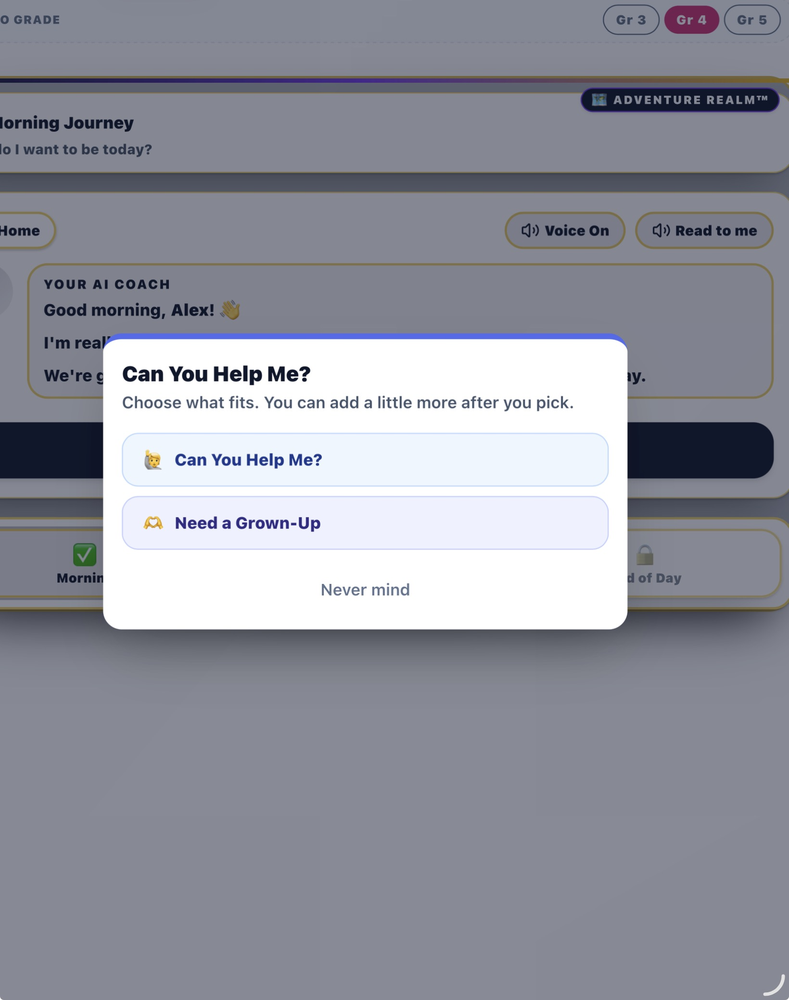
An alternate Care Check pathway gives students more ways to initiate contact. The request reaches the appropriate configured adult according to the school’s workflow. Mandated-reporter obligations always apply.